Decisions and operational clarity
E-commerce under pressure: why revenue is dropping imperceptibly and how to detect it earlier?
In many e-commerce companies, a drop in revenue does not start with one big crisis. It starts with small signals: a few worse days, a slight increase in complaints, minor delays in fulfillment. The problem is that these signals are rarely visible as a whole. This article shows why revenue falls "quietly" and how mature organizations detect it earlier.
In most e-commerce companies, a decrease in revenue doesn't look like an alarm. There isn't one day when everything collapses. Systems are running, campaigns are active, orders keep coming in. At first glance, the company seems to be functioning as usual, and sometimes even "well", if you look at individual indicators.
**
Concern arises elsewhere. The CEO notices that the monthly result is lower than forecasted, but it's hard to pinpoint one specific reason. The Head of Sales sees a slight decrease in conversion, but campaigns are still driving traffic. The COO receives signals about minor issues in fulfillment, but each of them seems "manageable" individually.
**
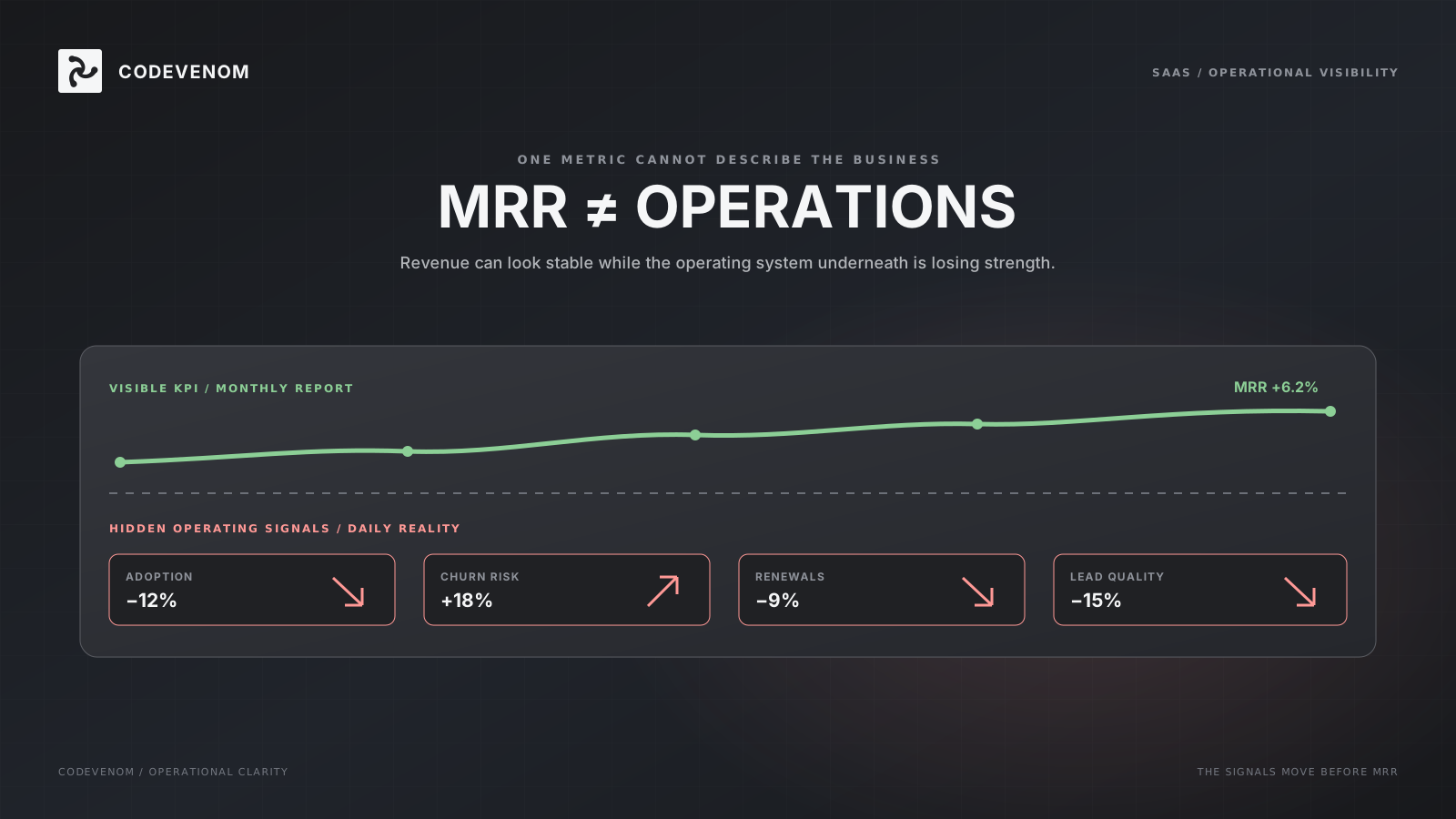
This is the moment when the decrease in revenue starts unnoticed. Not because no one is looking at the numbers. But because the company is looking at them in a scattered way. Each department sees its own piece of reality, but no one sees how these pieces start to reinforce each other in a negative way.
**In e-commerce, pressure works particularly quickly. Margins are thin, competition reacts immediately, and the customer doesn't wait. If a company doesn't have a mechanism for early problem detection, it only finds out about them when revenue has already dropped and then the space for calm decisions disappears.
One of the most common mistakes in e-commerce is looking for a single cause of declines. When revenue starts to decline, the first questions usually are: 'Is it marketing?', 'Did the campaigns fail?', 'Did the market cool down?'. It's natural, but in most cases, off target.
**
The decline in e-commerce revenues almost never starts at one point. It starts at the intersection of several areas that individually still look 'acceptable'. Conversion slightly drops but still fits within the range. The average basket value decreases slightly. Fulfillment starts to delay by a few hours or a day. Complaints increase, but not enough to raise an alarm yet.
Each of these signals individually doesn't look threatening. The problem is that they start to overlap. A customer comes from an ad, orders a product, receives it later than usual, has a worse experience, and doesn't return. Sales still 'add up', but the quality of revenue starts to deteriorate.
**
Without a systemic view, a company only sees the outcomes, not the mechanism. It reacts in a pinpoint manner improving campaigns, adding budget, changing offers without noticing that the problem doesn't lie in one department, but in their interaction.
Most e-commerce sales and marketing teams have very good data. They see traffic, conversion, cart, CAC, ROAS. The problem is that these data describe the result, not the cause.
**Sales see that there are fewer orders or that their value is dropping. But they do not see whether the cause is:
-
poor post-purchase experience,
-
growing fulfillment issues,
-
delays affecting repeat purchases,
-
increased number of complaints damaging reputation.
**This information exists only in other systems. In customer service. In logistics. In operations. Without connecting them, sales analyze revenue detached from operational reality, while operations optimize processes without awareness of their impact on results.
**
As a result, the company knows that "sales are declining," but does not know exactly where the leak starts. Decisions are made based on fragments of data, not the full picture.
Fulfillment and complaint handling are very rarely treated as early warning areas. More often they are perceived as an 'operational cost' or 'handling the consequences.' This is a serious mistake.
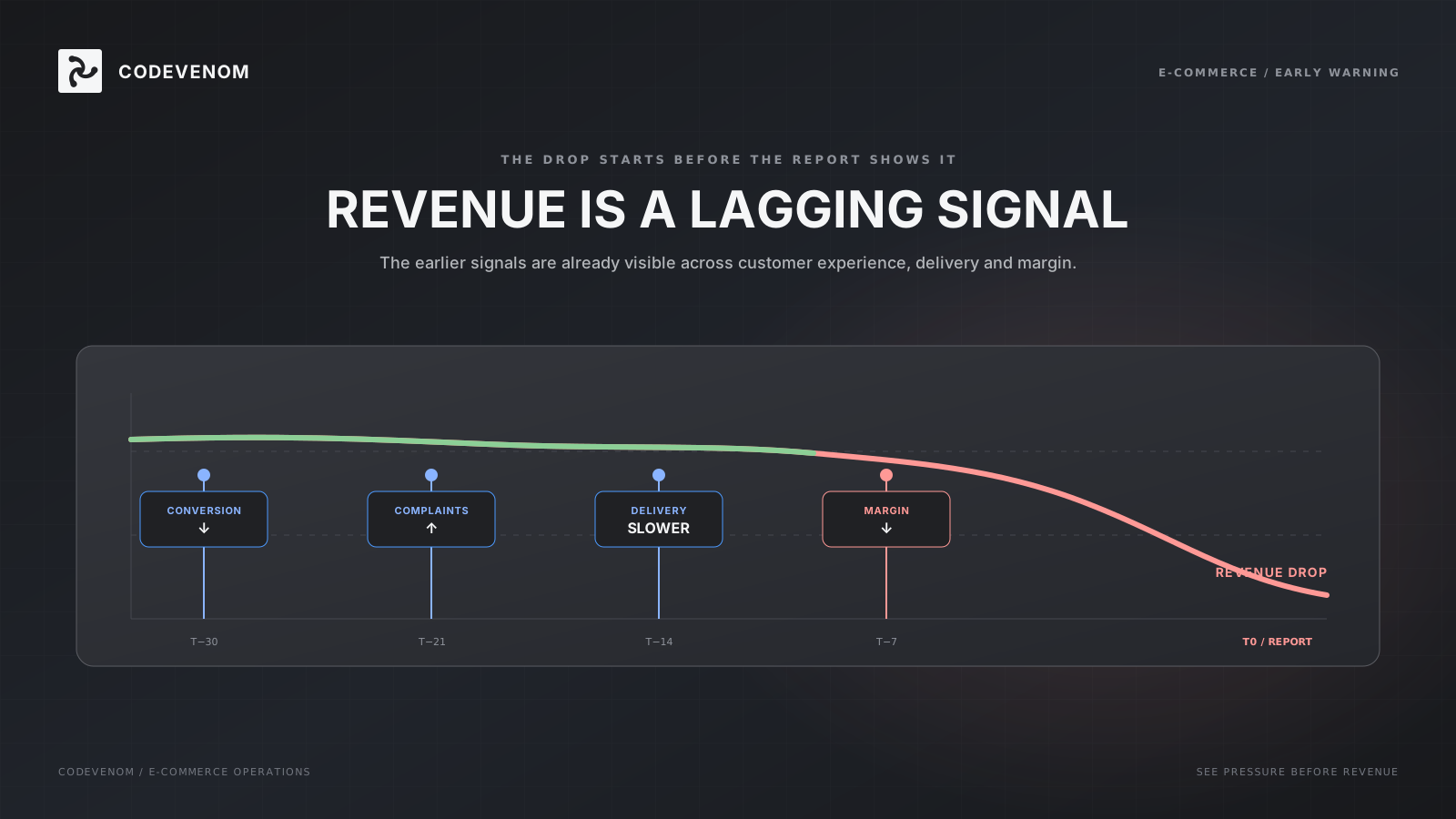
**Problems in fulfillment almost always arise earlier than revenue declines, but they are visible only locally. Delays by a few hours. More manual work. More exceptions. More customers asking 'where is my package.'
**
Similarly with complaints. Their increase does not immediately mean a crisis, but it is one of the most reliable signals that customer experience is starting to deteriorate. If these signals are not compared with sales data, the company learns about the problem only when customers stop returning.
**
Without a comprehensive picture of fulfillment and complaints, they remain an 'operational problem' instead of becoming a decision-making signal for management.
The moment when a revenue decline becomes visible in financial reports is always a delayed moment. It's an effect, not a cause. When the CFO sees a worse month, most decisions that could have prevented this should have been made a few weeks earlier.
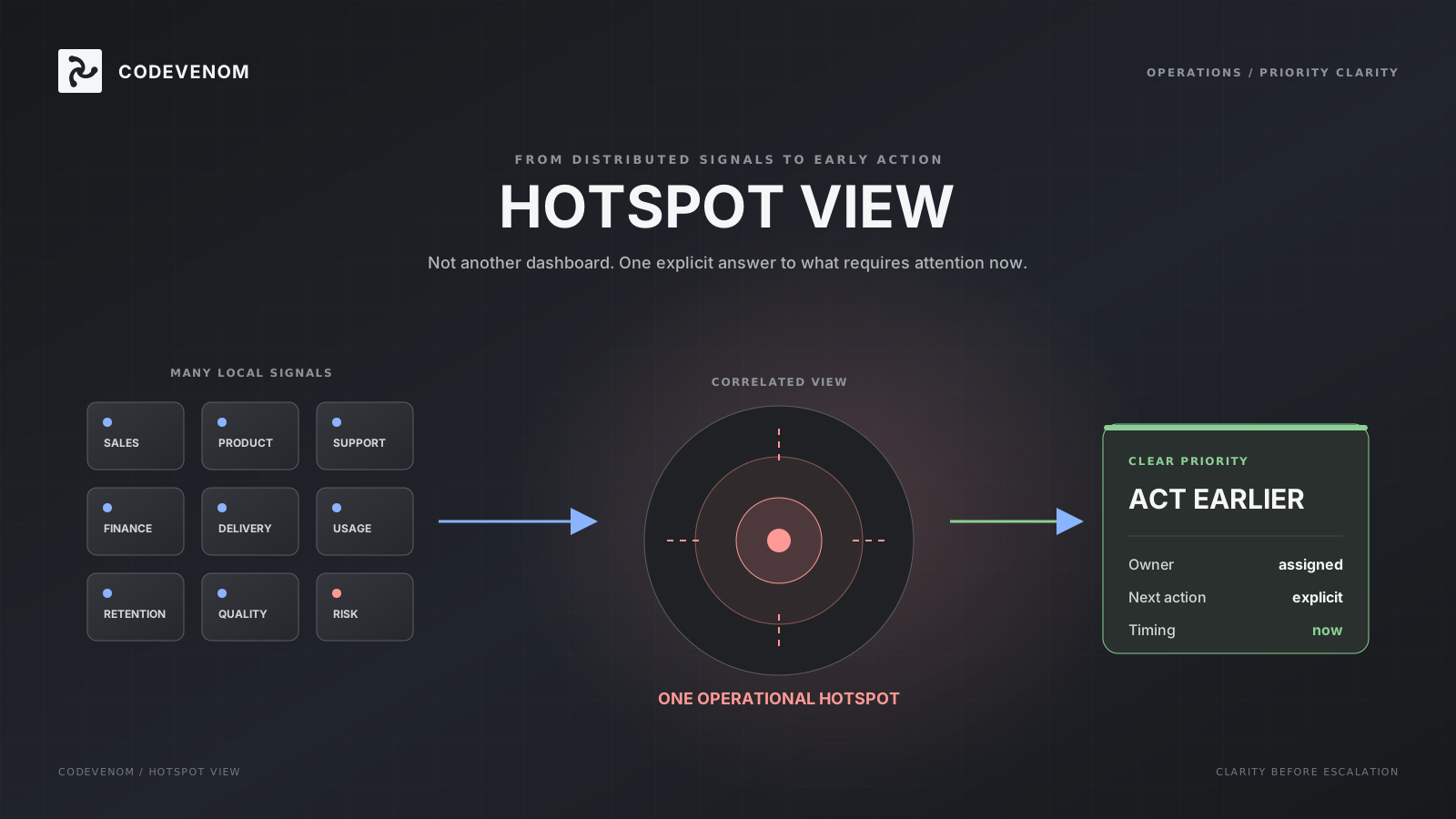
**Companies react too late because they lack a mechanism for signal selection. Everything looks "important", so the management's attention is scattered among current issues. There isn't a single place that says: this is where the risk for revenue accumulates.
**
As a result, decisions are made reactively:
-
we increase the marketing budget instead of fixing the customer experience,
-
we look for new campaigns instead of stabilizing fulfillment,
-
we optimize conversion, ignoring the reasons for the decline in retention.
**The company operates, but reacts only when the problem is already visible in the numbers.

Mature e-commerce organizations do not try to predict everything. They focus on early tension signals in the system. They know that revenue is the result of sales, operations, and customer experience interactions.
**Instead of looking at each area separately, they build one picture of operations that allows them to see:
-
where customer experience starts to deteriorate,
-
which operational issues have the greatest impact on sales,
-
where management attention should be focused today.
**
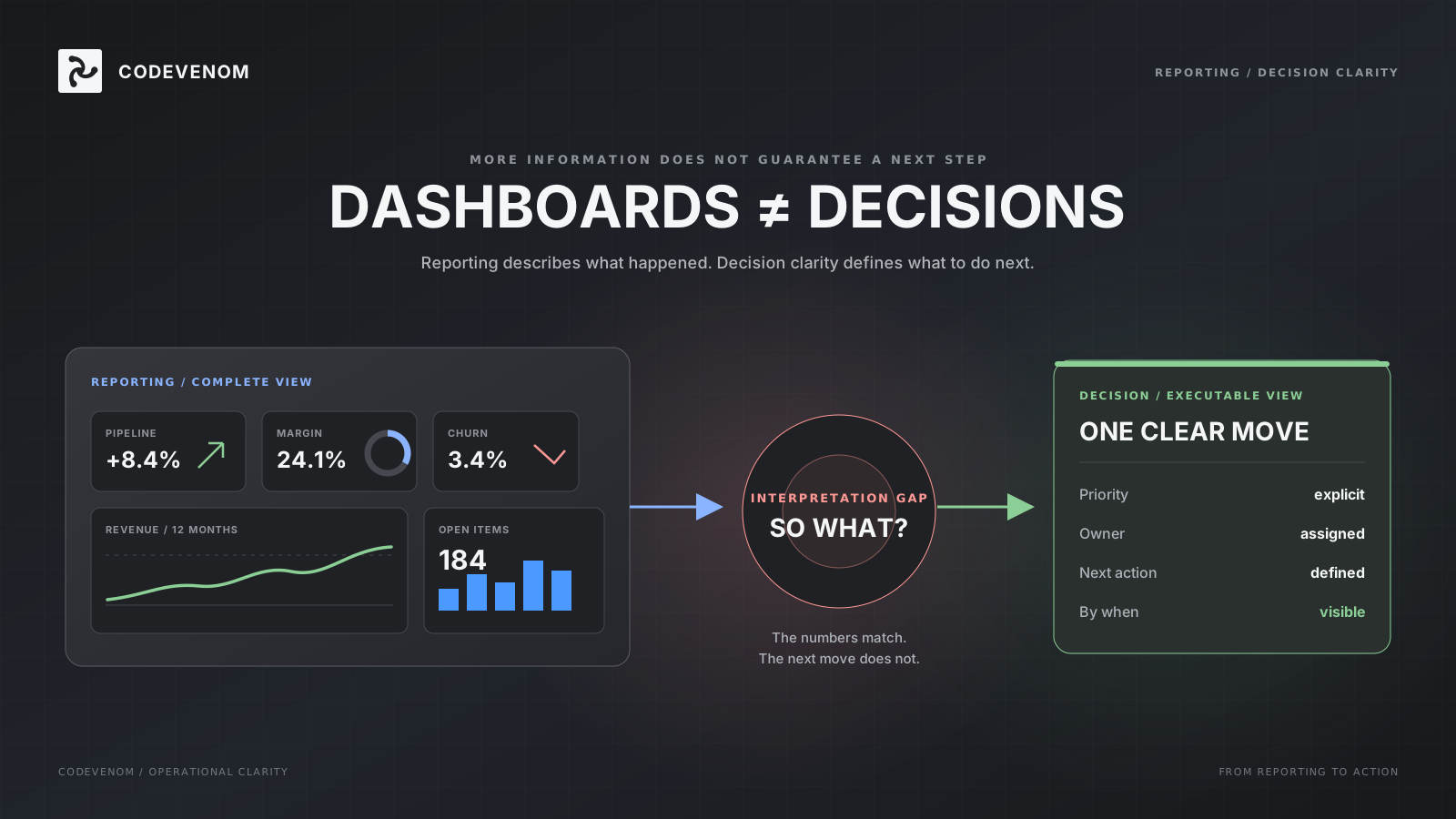
It's not about more dashboards. It's about clarity of priorities and knowing what is the most sensitive point of the system today.
The decrease in revenue in e-commerce is rarely a surprise. It is rather a result of a lack of early reaction. Companies that can detect problems earlier do not act faster, they act earlier.
**
This requires a different approach to data. Not as a report from the past, but as a daily decision-making signal that shows where the risk is focused today.
**If you have a feeling that revenue in your e-commerce is dropping 'silently' before it becomes visible in the results, it is not an anomaly. It is a signal that there is a lack of one coherent picture of operations.
**And that's where every real improvement in decisions begins.