Decisions and operational clarity
SaaS does not see its problems in real time: MRR vs actual operation
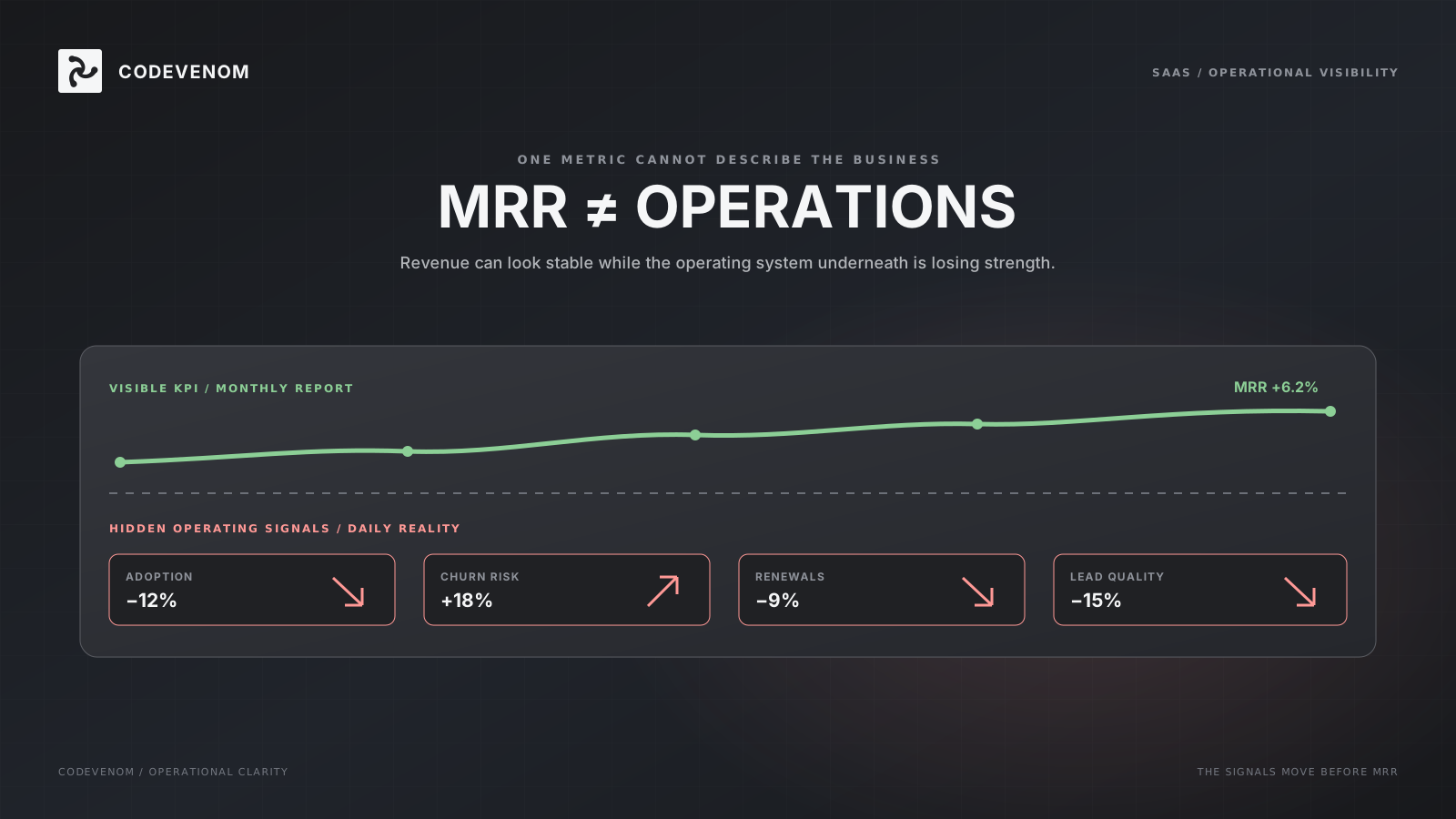
In many SaaS companies, MRR looks stable, even growing. Meanwhile, underlying issues with churn, product adoption, renewals, and lead quality are building up. The data exists, but it's scattered across teams and systems. This article shows why SaaS often doesn't see its problems in real time and why MRR increasingly fails to describe the company's actual operational condition.
In many SaaS companies, the day starts with looking at MRR. It's natural. MRR is simple, understandable, and gives a sense of control. If it's growing, everything seems to be heading in the right direction. If it's decreasing, it's clear that action needs to be taken.****
The problem arises when MRR appears stable for a long time, yet it becomes increasingly difficult to make decisions. The CEO feels that something is changing in customer behavior but can't clearly name it. The CPO sees signals in usage, but isn't sure if they're temporary or structural. RevOps sees data in marketing, sales, and churn, but lacks a single picture that would connect it all together.****
It's the moment when the company seems healthy formally but operationally starts to lose sharpness of vision. Not because someone isn't analyzing data. Because the data has stopped forming a logical story about what's really happening with the product and customers.
MRR is the end result of many processes. Marketing, sales, onboarding, product adoption, support, renewals. Each of these areas has an impact on the result, but MRR doesn't indicate which one is starting to perform worse.****
In practice, this means that MRR can mask operational problems for a long time. Churn may slowly increase, but it is compensated by new sales. Usage may decline in some segments, but it does not yet affect renewals. Marketing may provide leads that formally convert, but they are of increasingly lower quality.****
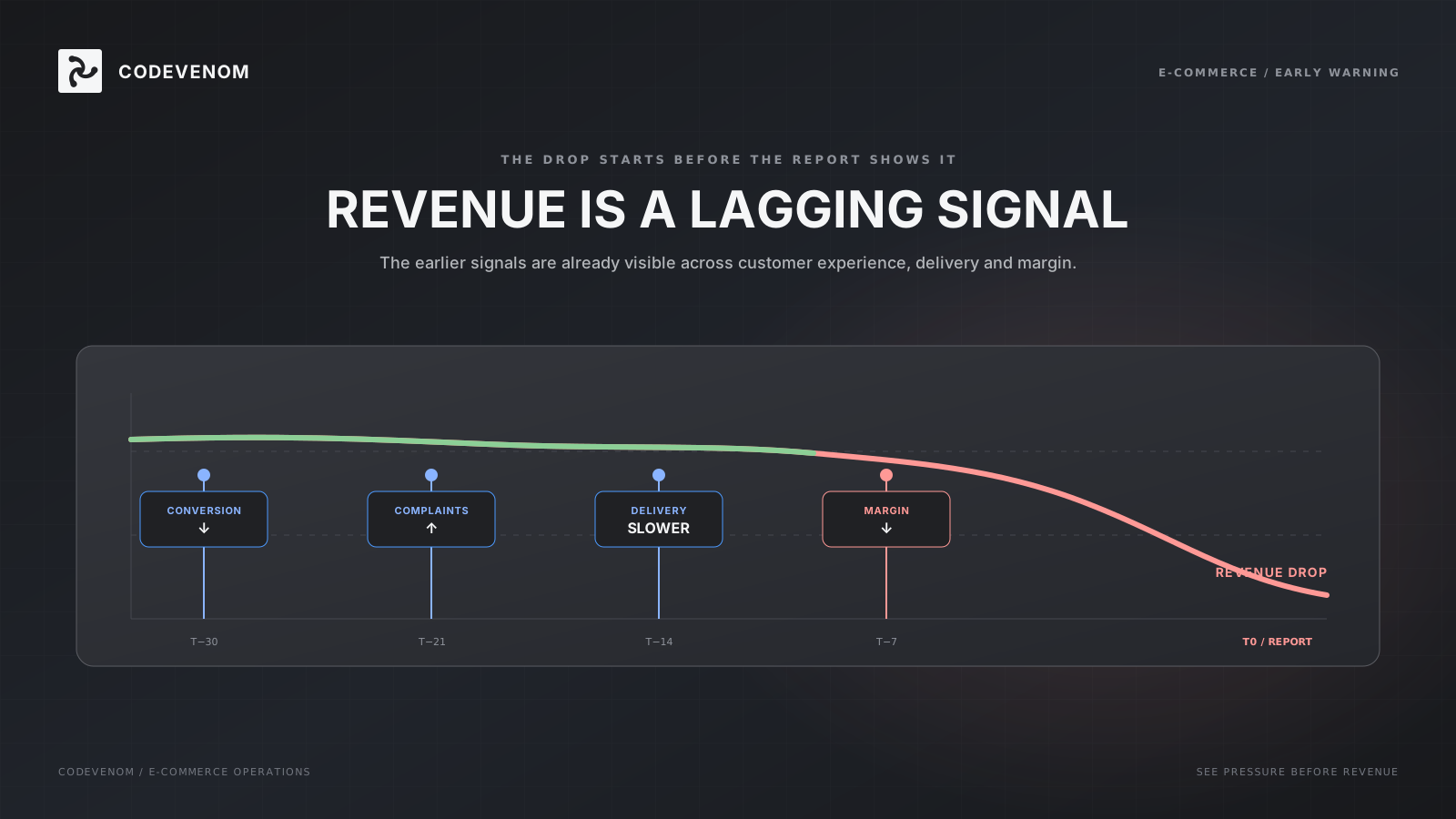
From a management perspective, everything still seems fine. From an operational perspective, tension is already building up. The problem is that MRR reacts with a delay. It shows the effect, not the cause. When it finally starts to decline, most decisions that could have prevented this should have been made much earlier.
In typical SaaS, usage is analyzed by product. Churn by finance or RevOps. Renewals by sales or account management. Marketing looks at its funnels, while customer success focuses on customer health metrics.****
Each of these areas has good data. Each team knows its numbers. The problem starts when this data is not put together in the context of managerial decisions.****
A drop in usage in a specific segment does not automatically lead to discussions about renewals. Churn growth is analyzed historically, without being linked to previous product signals. Marketing optimizes campaigns without seeing that new customers are quicker to stop using the product.****
The data exists but is scattered. Everyone sees their piece of the truth. No one sees how these pieces begin to come together into one operational problem.
SaaS companies rarely ignore data. They simply lack a mechanism that says: what you see in usage today will become a churn issue in a few weeks.****
As a result, decisions are made reactively. First, there is an issue with renewals. Then churn analysis begins. Only at the end does someone return to product data and see that the signals were visible much earlier.****
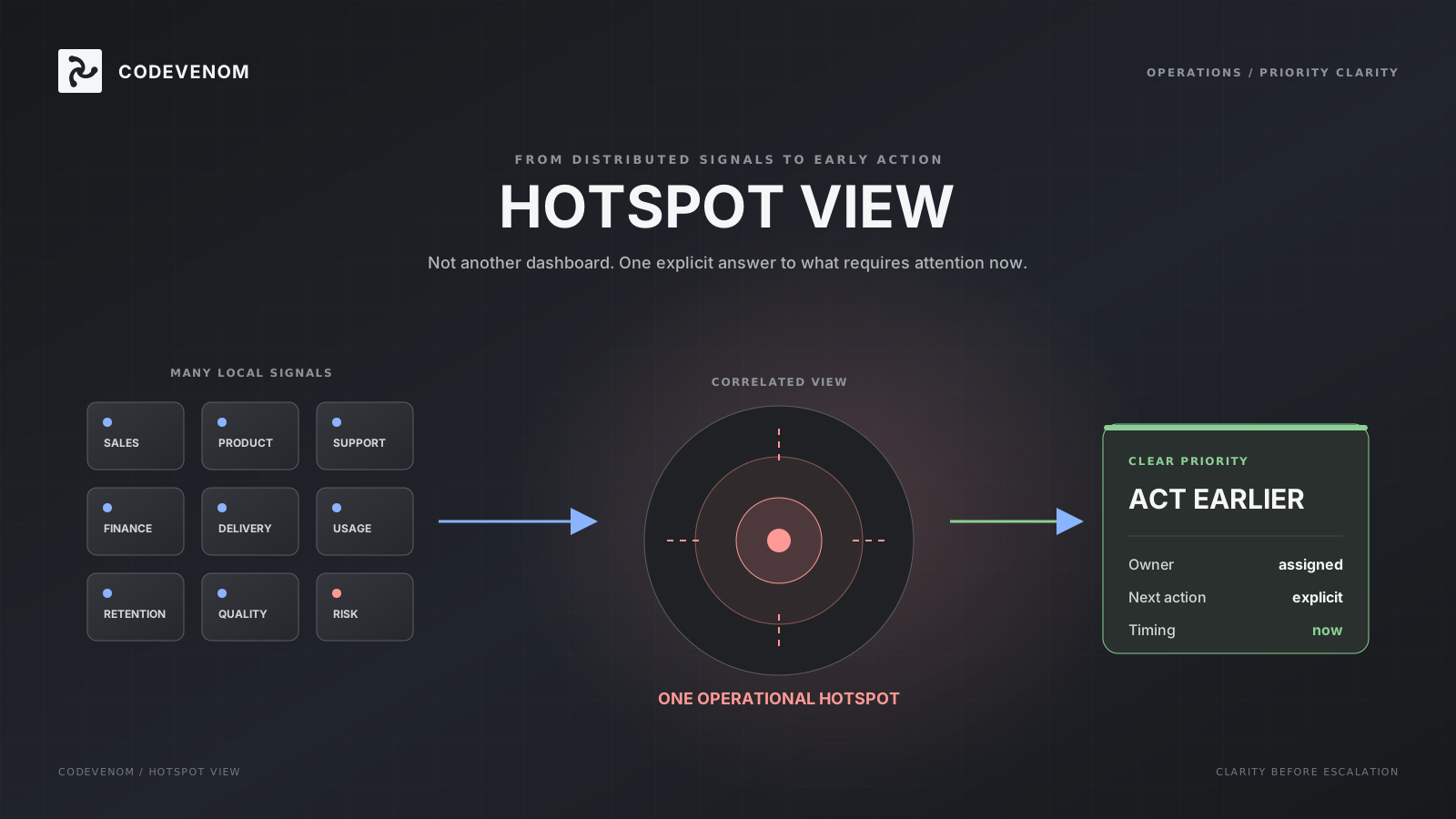
It's not a matter of lacking analytical skills. It's a lack of one coherent picture of operations that connects user behavior, sales processes, and financial results in one decision-making context.****
Without such a picture, a company always looks in the rearview mirror. It sees what happened, but does not see what is happening right now.
When data is scattered, priorities become scattered as well. The product focuses on the roadmap. Sales on hitting the target. Marketing on CAC. Customer success on tickets. Everyone acts rationally in their area.****
The problem is that the management does not have a clear answer to one basic question: what is the biggest risk to MRR in the coming months?****
Without this clarity, decisions are a compromise between the interests of departments, rather than a response to real tensions in the system. The company reacts in a patchy way, instead of shifting focus to where the problem actually accumulates.

Mature SaaS companies are moving away from treating MRR as the primary diagnostic tool. It is still important, but it is no longer the only reference point.****
Instead, they are building a picture of real operations. One that combines usage, churn, renewals, and marketing in one context. Not to control everything, but to see where the system starts to lose stability.****
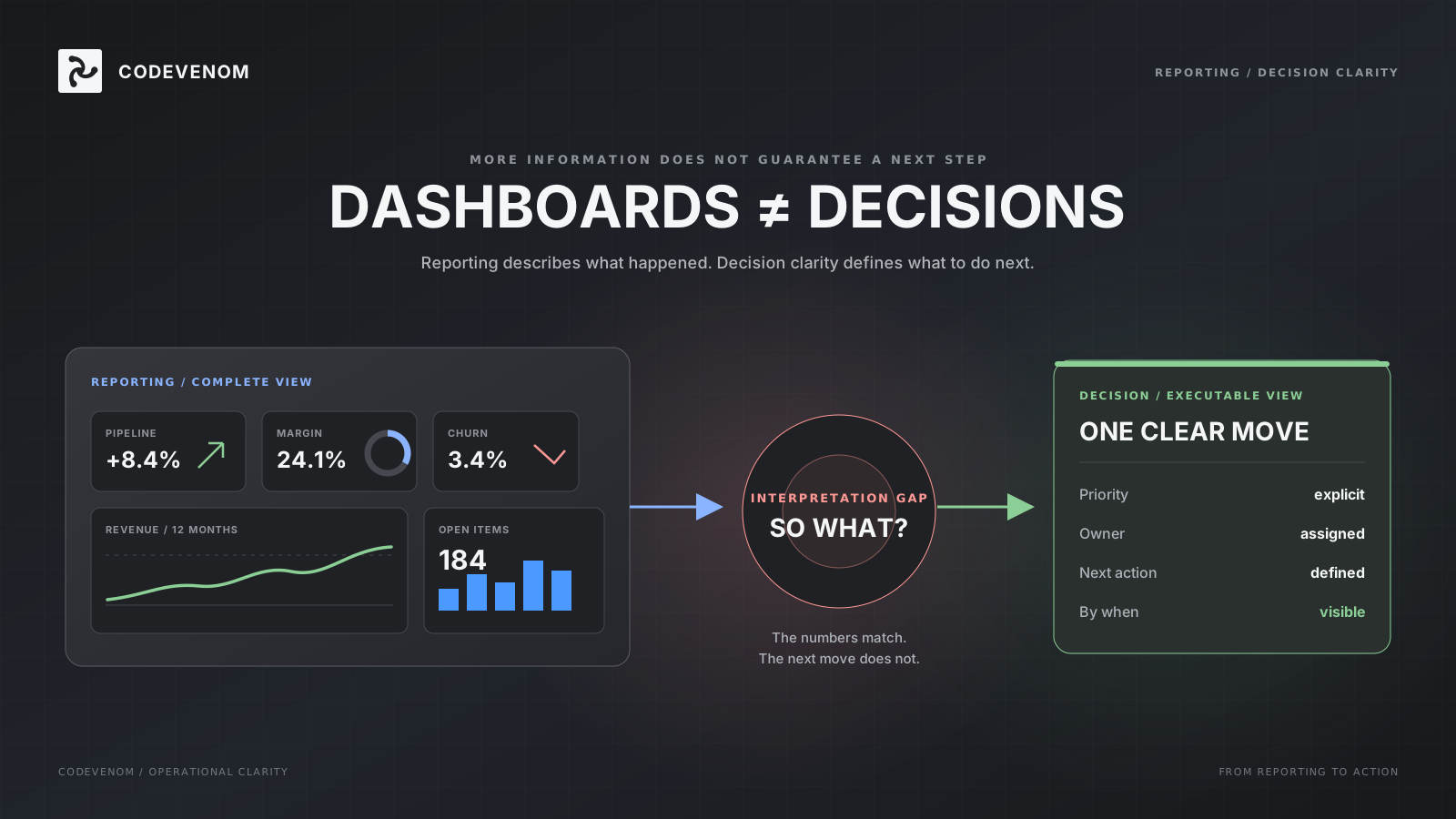
It's not about more dashboards. It's about clarity. It's about the ability to say which signals require management attention today and which decisions have the greatest impact on future MRR.
SaaS companies that see their problems in real time do not make better decisions because they have more data. They make them because they can connect the data into a logical picture of operations.****
If you feel that MRR is telling you less and less about what is really happening with the product and customers, it is not an alarm signal. It is a signal that the company has matured to a different level of decision clarity.****
And that's where decisions start to anticipate problems instead of chasing them.